

As long as it works” is yesterday’s mindset. In modern software development, building security in early determines quality, efficiency, and trust. Shift Security Left ensures that vulnerabilities are discovered and fixed before they cause damage — saving companies time, money, and nerves.
In many companies, speed is the top priority in software development: delivering features, meeting deadlines, seizing market opportunities.
Security? That often only comes into play at the very end – if at all.
The problem: Security vulnerabilities discovered shortly before release or even after go-live are expensive and time-consuming to fix.
The solution: Shift Security Left. This means integrating security measures and tests as early as possible in the software development process – from requirements analysis to code and the CI/CD pipeline.
How the Shift Security Left process works
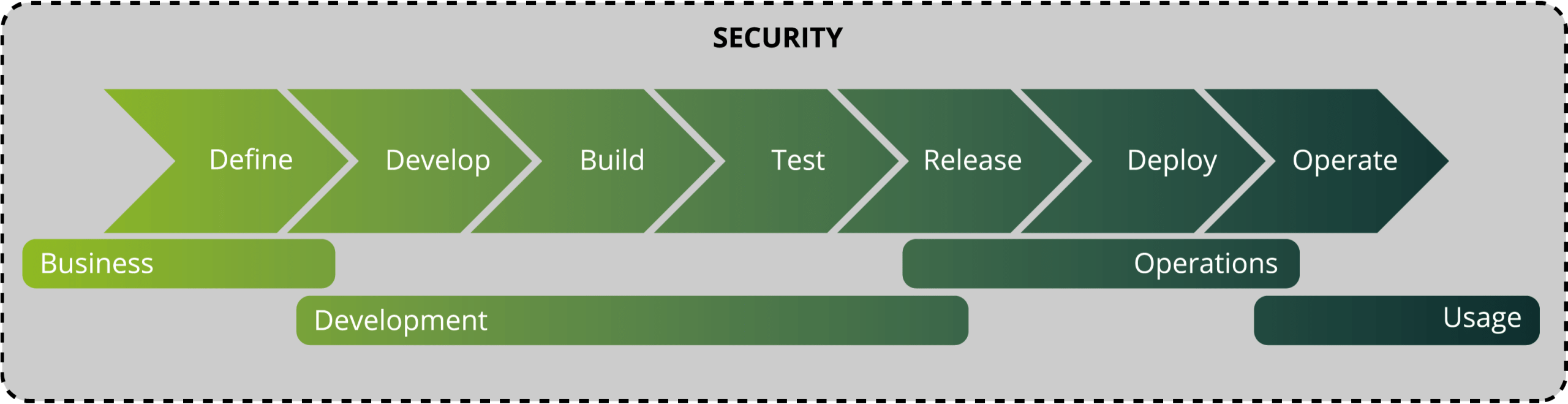
1. Planning phase – Define security as a requirement
Even during the specification of new features, security goals are defined.
These include threat modeling, secure architectural decisions, and budgeting for security.
Example: In a webshop project, it is defined from the start that all data is transmitted only via TLS 1.3, authentication is provided by a modern (MFA-capable) framework, and inputs are validated via whitelist.
2. Development phase – Secure coding
Developers apply proven security practices such as:
-
Input validation: Accept only expected, permissible values.
-
Output encoding: Output data in a way that prevents scripts from being executed.
-
Parameterized queries: Protection against SQL injection.
-
Use of secure libraries: Regularly scan third-party code (SCA – Software Composition Analysis).
These rules are enforced through Static Application Security Testing (SAST) tools directly in the editor or at commit time.
3. Integration into the CI/CD pipeline
-
Automated security scans on every commit or pull request.
-
Dependency scanning for known vulnerabilities (e.g., OWASP Dependency Check, Snyk).
-
Security gates that block merges if critical vulnerabilities are detected.
4. Testing phase – Don’t push security to the end
In addition to functional testing, continuous security testing is carried out:
-
SAST: Code analysis without execution
-
DAST: Dynamic testing of the running application
-
IAST: Combination of static and dynamic testing
Detected vulnerabilities are added directly to the backlog and fixed before release.
5. Deployment & operations
Even after go-live, security remains integrated: monitoring, log analysis, incident response plans, and regular penetration tests ensure that new attacks are detected and mitigated.
Benefits of Shift Security Left
- Early error detection saves money: The earlier a bug is found, the cheaper it is to fix.
- Less rework: Fixing security issues before delivery prevents costly hotfixes and emergency patches.
- Better code quality: Developers who think about security write structured, maintainable code – a competitive advantage.
- Higher trust: Customers and partners rely on secure software. In sensitive industries, this can even be decisive for contract awards.
- Compliance by design: Many regulatory requirements (e.g., NIS-2, ISO 27001) are easier to meet when security is embedded in the process.
Practical tips for implementation
-
Appoint Security Champions within the development team to spread know-how.
-
Training & awareness: Regularly train developers in secure coding practices.
-
Upgrade your toolchain: Automate SAST, DAST, and dependency scanning.
-
Security-focused code reviews: Make security a fixed part of every review checklist.
-
Start small, scale big: Integrate critical applications first, then expand the process to all projects.
Summary
Shift Security Left is not a “nice to have” but a necessity in a world where cyberattacks are becoming increasingly sophisticated. Those who integrate security early and automatically into the development process save costs in the long run, reduce risks, and improve software quality. Companies that establish this culture not only protect their products but also their reputation and customer trust.
References (for LinkedIn post)
- Serebrenik, A., et al. (2022): An Empirical Study on the Impact of Code Quality on Software Maintenance Effort. arXiv:2203.04374. https://arxiv.org/abs/2203.04374
- Is Secure Coding Education in the Industry Needed? An Investigation Through a Large Scale Survey. https://arxiv.org/abs/2102.05343
- Thou Shalt Not Depend on Me: Analysing the Use of Outdated JavaScript Libraries on the Web. https://arxiv.org/abs/1811.00918
- Vasilescu, B., et al. (2024): Security-relevant Review Comments: Prevalence, Categories, and Actionability. Empirical Software Engineering, Springer. https://link.springer.com/article/10.1007/s10664-024-10496-y
- Wachiraphan Charoenwet et al. (2024): Toward Effective Secure Code Reviews: An Empirical Study of Security-Related Coding Weaknesses. Empirical Software Engineering, Springer (preprint on arXiv). Available online at: https://link.springer.com/article/10.1007/s10664-024-10496-y?utm_source=chatgpt.com